Estrogen Dominance and Metabolic Health
Jan 30, 2026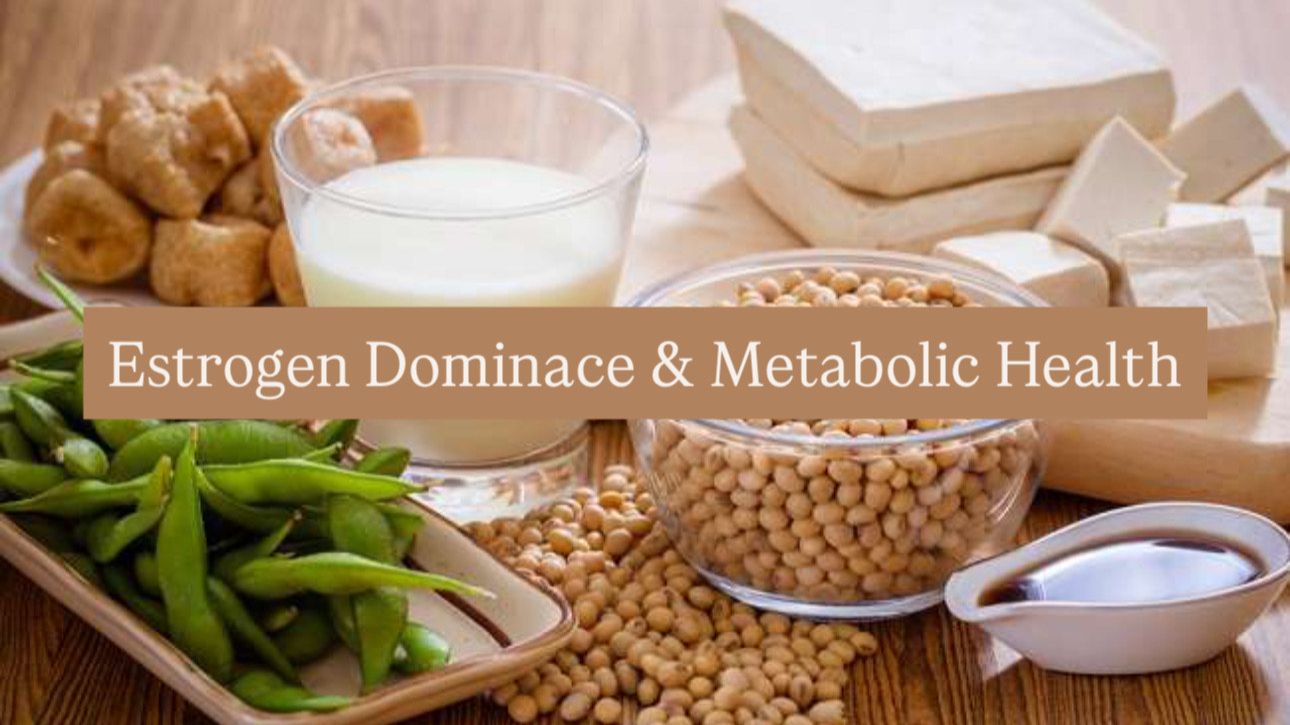
Estrogen dominance is one of the most commonly discussed—and most poorly explained—hormone issues today.
Many people are told their hormones are “normal,” yet they’re dealing with stubborn weight gain, PMS, anxiety, fatigue, poor sleep, brain fog, or bodies that no longer respond the way they used to. That disconnect leaves people confused, frustrated, and often blaming themselves.
The truth is, estrogen dominance isn’t just about having “too much estrogen.”
It’s a signaling and balance issue, deeply connected to metabolism, stress, insulin resistance, and modern environmental exposure.
Let’s break it down clearly.
What Estrogen Dominance Actually Is
Estrogen dominance means that estrogen signaling outweighs progesterone signaling in the body.
Estrogen and progesterone are meant to work together.
Estrogen is stimulating. It promotes growth, tissue proliferation, and energy availability.
Progesterone is stabilizing. It calms the nervous system, supports sleep, balances estrogen’s effects, and provides protection against overstimulation.
When progesterone is too low—or estrogen signaling is excessive—estrogen dominates.
This can happen even when estrogen levels on a lab test are technically normal, which is why so many people feel dismissed or confused by their results.
Estrogen dominance is not a diagnosis—it’s a pattern.
The Three Main Drivers of Estrogen Dominance
1. Low progesterone (the most common driver)
Most modern women are not estrogen dominant because estrogen is high.
They’re estrogen dominant because progesterone is low.
Progesterone is extremely sensitive to stress. Chronic psychological stress, poor sleep, under-eating, over-exercising, and blood sugar instability all increase cortisol demand. When cortisol demand is high, progesterone production is often sacrificed.
This is why estrogen-dominant symptoms frequently show up:
- during periods of chronic stress
- after years of dieting
- in the late 30s and early 40s
- during perimenopause (progesterone declines first)
2. Impaired estrogen clearance
Your body produces estrogen constantly. That’s normal.
What matters is whether estrogen is broken down and eliminated or reabsorbed and recycled.
The liver and gut play a central role in estrogen clearance. When detox pathways are sluggish, gut bacteria are imbalanced, fiber intake is low, or alcohol intake is high, estrogen stays in circulation longer than it should.
In many cases, estrogen dominance isn’t about overproduction—it’s about poor exit.
3. Excess estrogenic signaling from the environment
This is where modern life fundamentally changes the conversation.
Not all estrogen exposure comes from your own hormones.
And this is where understanding the difference between phytoestrogens and xenoestrogens matters.
Phytoestrogens: Context Matters
Phytoestrogens are plant-derived compounds that can interact with estrogen receptors.
They are not estrogen.
They do not convert into estrogen in the body.
They bind weakly and preferentially to estrogen receptor beta, which is associated with regulatory and protective effects.
Because of this, phytoestrogens behave in a context-dependent way.
- In lower-estrogen states (such as postmenopause), they can gently support estrogen signaling.
- In higher-estrogen or estrogen-dominant states, they can block stronger estrogens from binding.
This is modulation—not disruption.
What about soy?
Soy is often blamed for estrogen dominance, but quality and processing matter far more than the food itself.
Traditional soy foods—like tofu, tempeh, miso, natto, and edamame—are minimally processed and consumed within a whole-food matrix that includes fiber, protein, and micronutrients. Fermented soy, in particular, can support gut health, which actually improves estrogen metabolism.
Ultra-processed soy is a different category entirely.
Soy protein isolate, soy oil, soy lecithin, and many plant-based meat substitutes are highly refined, stripped of fiber, inflammatory, and often consumed in large amounts by metabolically unhealthy individuals.
The issue is not soy.
The issue is ultra-processing combined with insulin resistance and poor gut health.
Xenoestrogens: What They Are and Why They’re Different
Xenoestrogens are synthetic, man-made chemicals that mimic estrogen in the body.
They are not hormones—but they behave like hormones by binding to estrogen receptors.
Your body did not evolve with these compounds, and it does not regulate them the way it regulates natural hormones or plant compounds.
Xenoestrogens come from everyday exposures:
plastics, food packaging, personal care products, fragrances, pesticides, non-stick cookware, industrial chemicals, and even thermal receipts.
Once inside the body, they can bind strongly—often to estrogen receptor alpha, which drives cell growth and proliferation.
Unlike natural estrogen:
- they are not regulated by feedback loops
- they are not easily broken down
- they accumulate in fat tissue
- and they persist long-term
This means estrogen signaling can be excessive even when estrogen labs look normal.
Why Phytoestrogens and Xenoestrogens Shouldn’t Be Grouped Together
Phytoestrogens are weak, food-based, and temporary.
Xenoestrogens are strong, persistent, and disruptive.
Phytoestrogens often act as buffers.
Xenoestrogens act as amplifiers.
Fear of flaxseed or tofu while living in constant contact with plastics and chemicals is misplaced.
Estrogen Dominance Affects Men Too
Estrogen dominance is not just a women’s issue.
Men are increasingly experiencing excess estrogen signaling as well, even though it’s rarely framed that way.
In men, this can show up as:
- low testosterone
- reduced muscle mass
- increased belly fat
- fatigue and mood changes
- fertility issues
- difficulty losing weight
The drivers are the same: insulin resistance, excess body fat increasing aromatization, xenoestrogen exposure, and impaired liver clearance.
This is a metabolic issue, not a gendered one.
The Insulin–Estrogen Connection
Insulin resistance plays a central role in estrogen dominance.
When insulin is chronically elevated:
- Aromatase activity increases, converting more testosterone into estrogen
- Fat tissue stores more xenoestrogens
- Ovulation becomes irregular, reducing progesterone production
- Liver detox capacity is reduced, slowing estrogen clearance
This is why chronic dieting, under-eating, over-exercising, and unmanaged stress often make hormone symptoms worse instead of better.
You cannot fix estrogen dominance while ignoring blood sugar regulation.
What Actually Helps
Reducing estrogenic load doesn’t require perfection or extreme detox protocols.
The most impactful changes are often simple:
- Stop heating food in plastic
- Remove synthetic fragrance
- Replace non-stick cookware
- Simplify personal care products
- Eat enough protein and fiber
- Reduce ultra-processed foods
- Support blood sugar regulation
This isn’t about detoxing harder.
It’s about loading the system less and supporting the body’s natural clearance mechanisms.
The Bottom Line
Estrogen dominance isn’t a personal failure.
It’s a signal.
A signal that metabolism, stress resilience, detox capacity, and environmental exposure need support.
When metabolic health improves, hormone balance often follows.
If you want structured guidance, you can join Lifestyle School for Weight-Loss or apply for my 8-week personalized coaching program, where we work one-on-one to address these root causes.
And if this post helped you, consider sharing it with someone who needs a clearer, calmer explanation of estrogen dominance.
Your body isn’t broken—it’s communicating.
Join Lifestyle School for Weight-Loss, the step-by-step program designed to help you lose weight, feel confident in your body, and simplify healthy living. Learn how to use fasting, nutrition, and sustainable habits to create lasting results—all without the overwhelm.
Let’s do this together! 💪
Ready to Start Fasting the Right Way?
Get my "4 Steps to Getting Started Fasting the Right Way" guide for free! This quick, easy-to-follow resource will help you ease into fasting, avoid common mistakes, and feel confident on your journey to better health. Sign up now and start fasting with confidence! ✨
We hate SPAM. We will never sell your information, for any reason.
